Article: Gym Leggings for Ballet Class: How to Choose the Right Fit
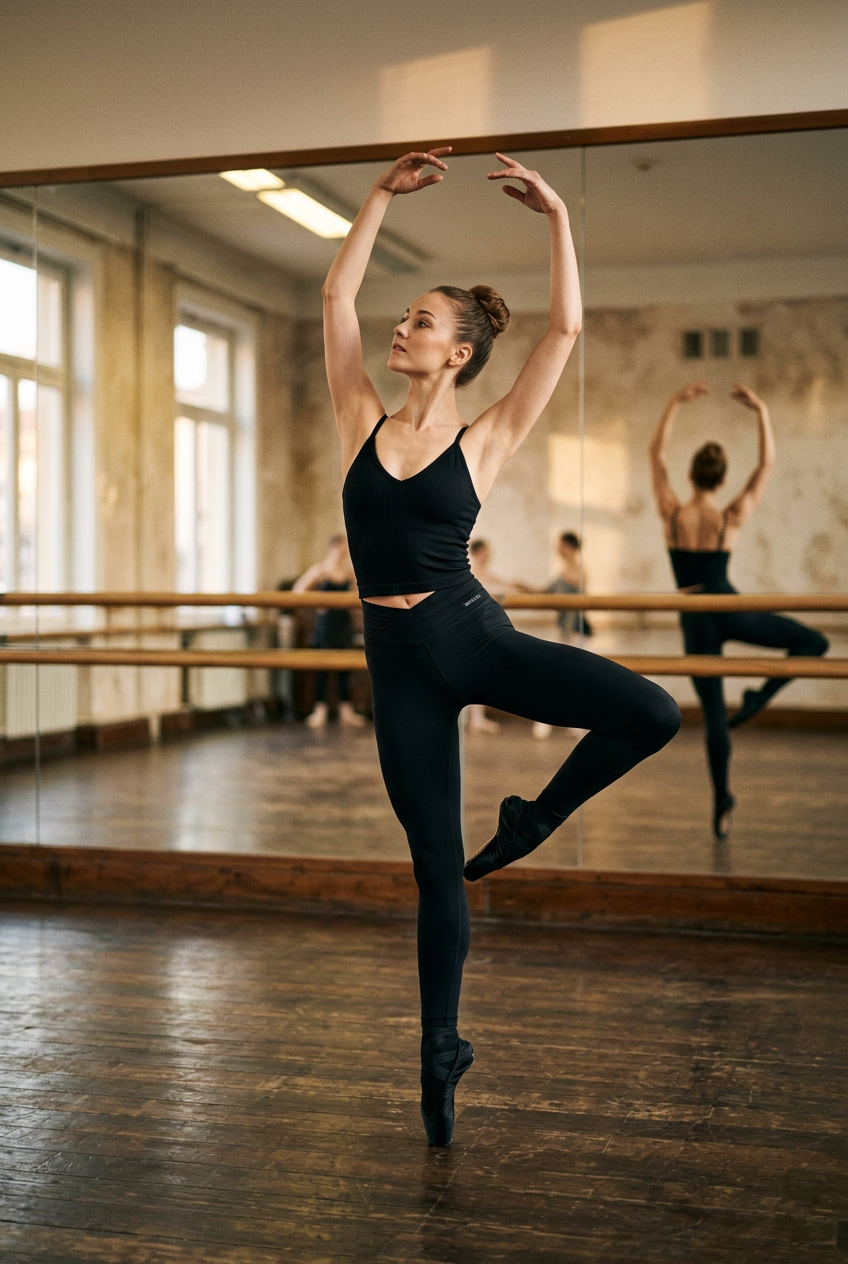
Gym Leggings for Ballet Class: How to Choose the Right Fit
Ballet class has its own unwritten dress code — and for many dancers, the question of whether gym leggings are acceptable is one that comes up again and again in studio changing rooms, Facebook groups, and dance forums. The short answer: it depends on the leggings. The longer answer is what this guide is for.
Whether you're returning to ballet as an adult, attending your first contemporary ballet fitness class, or simply trying to make the most of what's already in your wardrobe, here's what to consider before you pull on a pair.
Do Ballet Teachers Allow Leggings?
Most recreational and adult ballet classes — particularly barre, ballet fitness, and open-level classes — are perfectly happy with leggings. Classical vocational training and more traditional schools may still expect a leotard with tights, but for the vast majority of dancers in the UK, well-fitted leggings are an accepted and practical choice.
If you're unsure, check with your teacher before your first session. Most will simply ask that whatever you wear allows them to see the line of your legs clearly — which brings us to the next point.
Can the Teacher See Your Knees?
This is one of the most common concerns raised by dancers new to wearing leggings in class. Teachers need to observe your knee alignment, foot placement, and overall leg line — particularly in exercises like pliés, tendus, and relevés where correct tracking matters.
Thick, heavily textured, or patterned leggings can make this harder. A smooth, fitted fabric in a solid colour is generally the better choice for studio wear. The teacher isn't looking for a particular colour — they're looking for clarity of form. That's why a classic black or a clean, solid tone tends to work best.
What About Compression — Do You Need It?
Ballet doesn't require the same level of impact support as running or HIIT, but many dancers still find a gentle hold helpful — particularly around the waist and hips during centre work. The key is comfort: you want leggings that move with you rather than restrict you, and that stay in place through plié sequences, arabesques, and floor work without needing constant adjustment.
A well-designed waistband makes a significant difference here. High-waisted or cross-waisted styles distribute the waistband more evenly across the torso, which many dancers find more secure and comfortable than a standard single-band design — especially during longer classes or when transitioning between barre and centre.
The Cross Waistband: Why Dancers Like It
The cross-waisted design has grown popular in the dance and barre community for good reason. Rather than sitting in a fixed line around the waist, the crossed waistband wraps around the body in a way that stays put during movement — no rolling, no slipping, and no distracting adjustments mid-class.
It also offers a clean, streamlined silhouette that works just as well in a contemporary fitness studio as it does in a more classical setting.
Chapter 19's Cross Waisted Leggings are designed with exactly this kind of wearability in mind. Available in four colours, they're a practical starting point if you're building a studio wardrobe without overcomplicating it.
Which Colour Works Best for Ballet?
There's no single rule, but a few things are worth considering:
- Black is the most versatile and widely accepted colour in ballet and fitness studios alike. The Chapter 19 Black Cross Waisted Leggings pair easily with any top and are a reliable go-to for class.
- Deep, solid tones — like the Olive Green Cross Waisted Leggings or the Coffee Cross Waisted Leggings — work well in contemporary and fitness-focused classes where the dress code is more relaxed. The muted tones remain understated while still being distinct from basic black.
- A bolder solid colour like the Cherry Red Cross Waisted Leggings can be a confident, expressive choice — particularly in adult recreational classes where personal style is more welcome. Check your studio's expectations first if you're unsure.
What to Avoid
A few things that tend not to work well in a ballet or barre context:
- Capri or cropped styles — they can make it harder for a teacher to see your full leg line, particularly ankle and foot placement.
- Heavily textured or mesh panels — these can obscure alignment and look out of place in a classical studio setting.
- Overly loose or wide-leg fits — ballet exercises require a clear view of leg shape and joint position. Fitted is better.
- Waistbands that roll or slide — an adjusting waistband mid-exercise is distracting for both you and your teacher. Look for styles with a secure, stay-put construction.
A Note on Suitability for Different Class Types
Not all ballet-adjacent classes have the same conventions:
- Adult recreational ballet: Leggings almost always acceptable. Full-length, fitted, solid colour preferred.
- Barre fitness: Leggings are standard. Cross-waisted styles work particularly well here given the range of movement involved.
- Contemporary ballet / ballet fitness hybrids: Very relaxed dress codes. Most well-fitted leggings are fine.
- Vocational or exam-track classes: Check with your teacher. Some schools still require traditional uniform.
The Practical Summary
If you're choosing leggings for ballet class, look for: full length, fitted cut, smooth solid fabric, a secure waistband that won't shift, and a colour your teacher can easily read your leg line in. The Black, Cherry Red, Coffee, and Olive Green Cross Waisted Leggings from Chapter 19 each meet those criteria — and the cross-waisted design means you won't be fidgeting with your waistband when you should be concentrating on your port de bras.